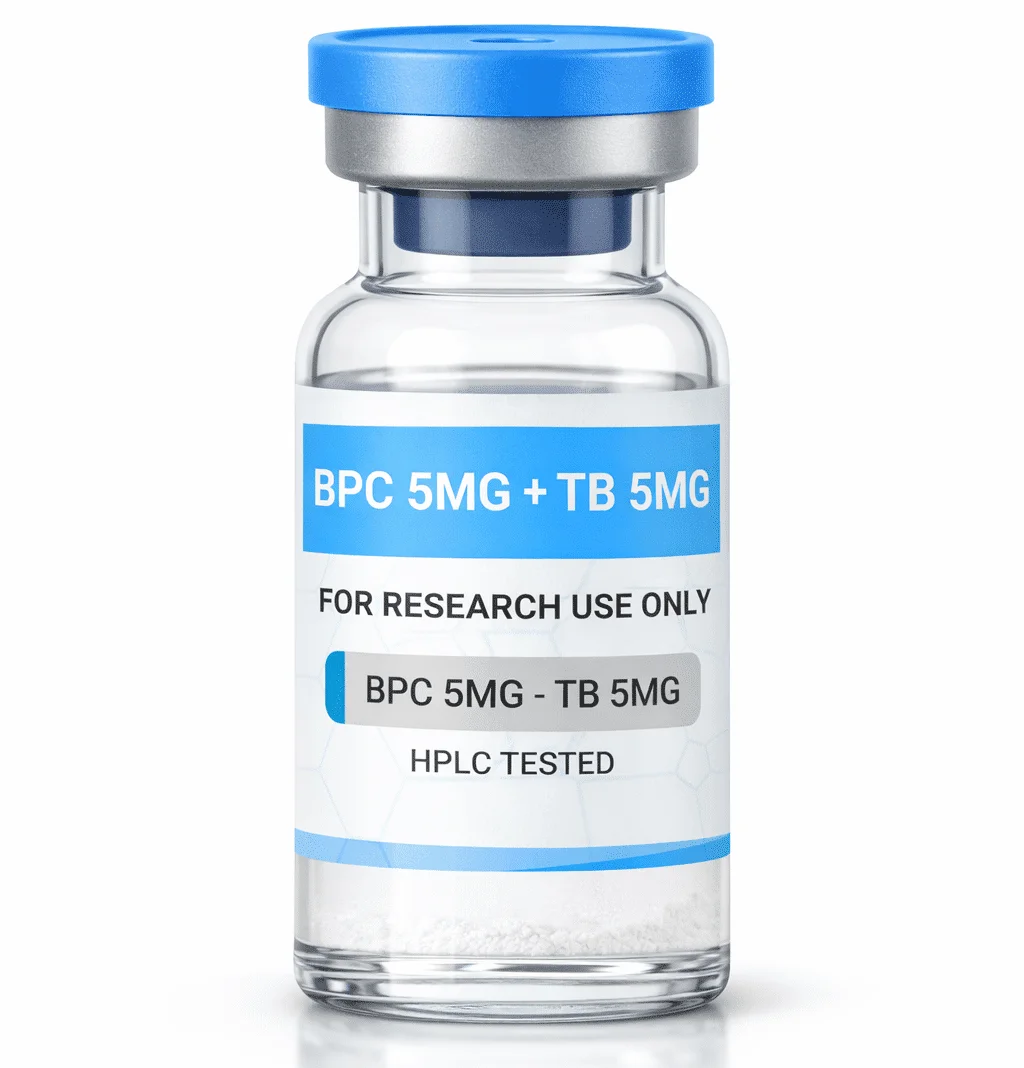
The BPC-157 + TB-500 includes two widely researched peptides often used in advanced laboratory investigations related to tissue recovery, connective tissue research, repair mechanisms, and regeneration signaling pathways.
This combination is commonly selected for controlled research models where the goal is to observe tissue support outcomes using multiple research compounds with distinct—but potentially complementary—mechanisms.
BPC-157 (Body Protection Compound-157) is a peptide fragment studied for its influence on protective cellular pathways. Research commonly explores BPC-157 in relation to:
-
connective tissue signaling models
-
tendon and ligament research pathways
-
gut integrity and GI-repair mechanisms (research interest area)
-
inflammation response modulation models
-
cellular protection and recovery signaling
Because BPC-157 is derived from a naturally occurring body compound, it has become a highly discussed peptide in tissue repair research.
TB-500 is a synthetic version modeled after Thymosin Beta-4, researched for its association with:
-
cellular migration and tissue remodeling
-
actin binding and cytoskeletal regulation
-
wound healing and tissue recovery models
-
muscle recovery signaling pathways
-
vascular support and angiogenesis-related studies
TB-500 is commonly included in studies where researchers require broader systemic tissue-support signaling pathways.
In research applications, this combination is often selected for studies that may benefit from multi-mechanism evaluation such as:
1) Tissue Recovery & Regeneration Studies
Designed for investigative models involving repair response mechanisms.
2) Connective Tissue Research
Used in protocols exploring tendon, ligament, and connective tissue function.
3) Inflammation & Repair Signaling
Often explored in inflammation response pathways and recovery timelines.
4) Vascular Support & Angiogenesis Research
TB-500 is frequently studied in models involving blood vessel development and tissue nourishment pathways.
At PurePeptix, all peptides are supplied for research with a focus on:
-
high-quality sourcing standards
-
secure vial packaging for stability
-
clear labels and handling standards
-
consistency and integrity for analytical research
For best stability:
-
Store vials in a cool, dry place
-
Long-term storage: -20°C recommended
-
Avoid repeated temperature fluctuations
-
Keep sealed when not in use
 BPC-157 and TB-500 are intended strictly for laboratory research and analytical purposes only.
Reviews
There are no reviews yet.